
Have you ever wondered what ingredients sake is made from?
You might know sake is made from rice, but did you know sake has additives? Have you heard of natural sake?
This article introduces sake additives, and will guide how you can distinguish natural sake from other types from the label.
What are the ingredients of Japanese sake? Organic sake and natural sake?
To start with, the main ingredients of sake are just three: rice, rice koji, and water—extremely simple. And then we add additives like yeast and added alcohol depending on the products.
So what are the differences between organic sake and natural sake? Organic sake uses Certified Organic (JAS) rice which is free from chemical fertilizers and synthetic pesticides. Not just the rice from the ingredients, but the entire sake brewing process is also certified to meet organic standards.
Whereas organic sake may contain (organic) added yeast and lactic acid bacteria, natural sake does not contain any additives throughout the whole production including fertilizer and yeast, and is made using only rice and water. We call natural sake in Japanese “Shizen-shu”, which means “Additive-free sake”. Natural sake is a sake brewed to be as close to its natural state as possible.
Sake additives that are required to be listed on the label
There are two types of sake additives; one which needs to be listed on the label and one that does not.
Some of the sake ingredients are subject to the labeling requirements and examples are below.
- Added alcohol (distilled alcohol)
- Saccharides
- Acidifier
Sake additives that are not required to be listed on the label
Among sake ingredients that are not subject to the labeling requirements, some which are often used as sake additives can be recognized as additives and others cannot be recognized as additives;
1. ingredients which can be recognized as additives
a. enzyme preparation
In sake brewing, the conversion of rice starch into sugar is primarily carried out by enzymes produced by koji.
To supplement some of these enzymes, “enzyme preparations” are sometimes used.
2. ingredients which can not be recognized as additives
b. adjusting mineral content of water
c. lactic acid
d. yeast
e. sulfite
Lactic acid helps create an acidic environment in the yeast starter (shubo) at the beginning of the sake brewing process, preventing the growth of unwanted bacteria and allowing the yeast to develop in a healthy way.
While a small number of modern sakes are made without added yeast, the vast majority rely on the addition of yeast to initiate fermentation.
How to distinguish natural sake
So how can we distinguish if it’s natural sake or not?
If you prefer additive-free sake, here’s how you can find them.
1. Recognized by the brewery name on the label
There are few breweries who only produce additive-free sake and you could pick natural sake by remembering certain breweries’ names in Japan. Here are some examples below;
a. Tsuchida breweryー
b. Niida natural sake
c. Aramasa
d. Terada honke
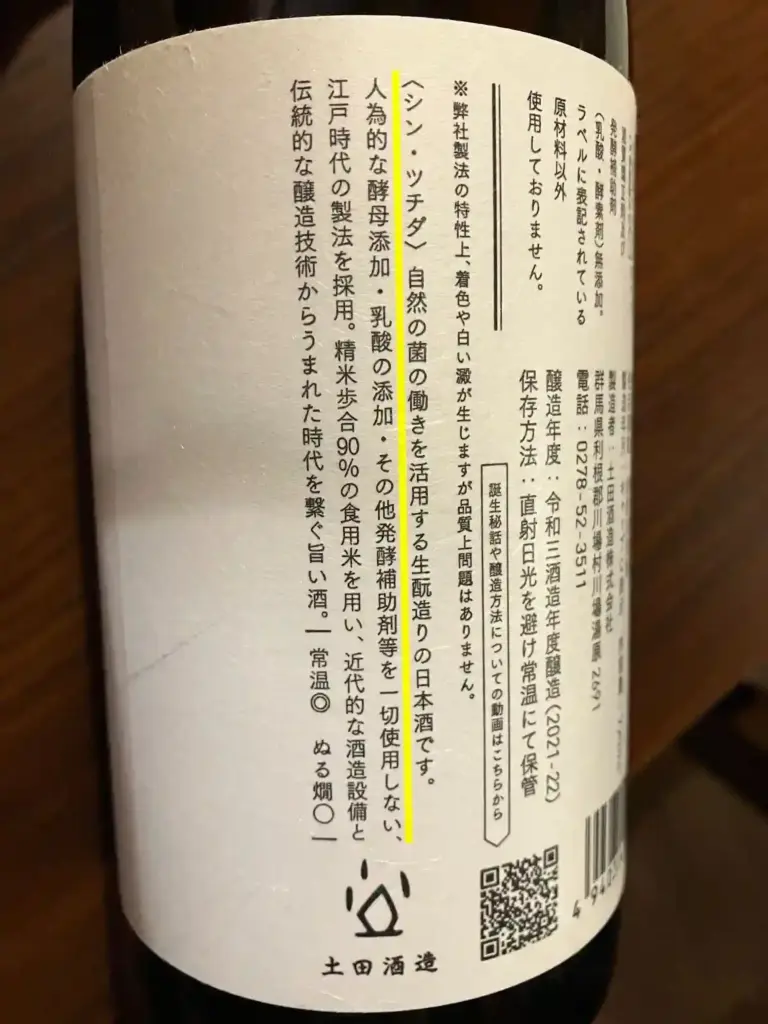
Unfortunately, many of the breweries show their labels only in Japanese so maybe you can use google translation to see if they indicate additive-free label as below:
<Japanese label>
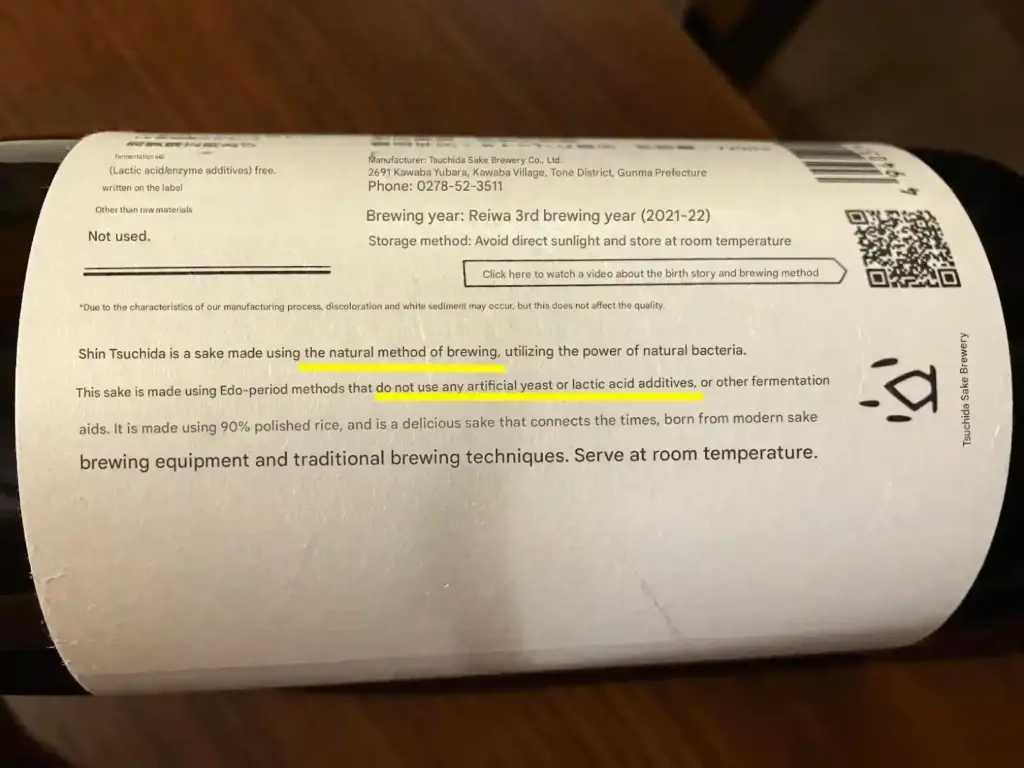
It says “Does not use any artificial yeast, lactic acid additives or other fermentation aids.” (yellow lines)
<translated in English by google translation>
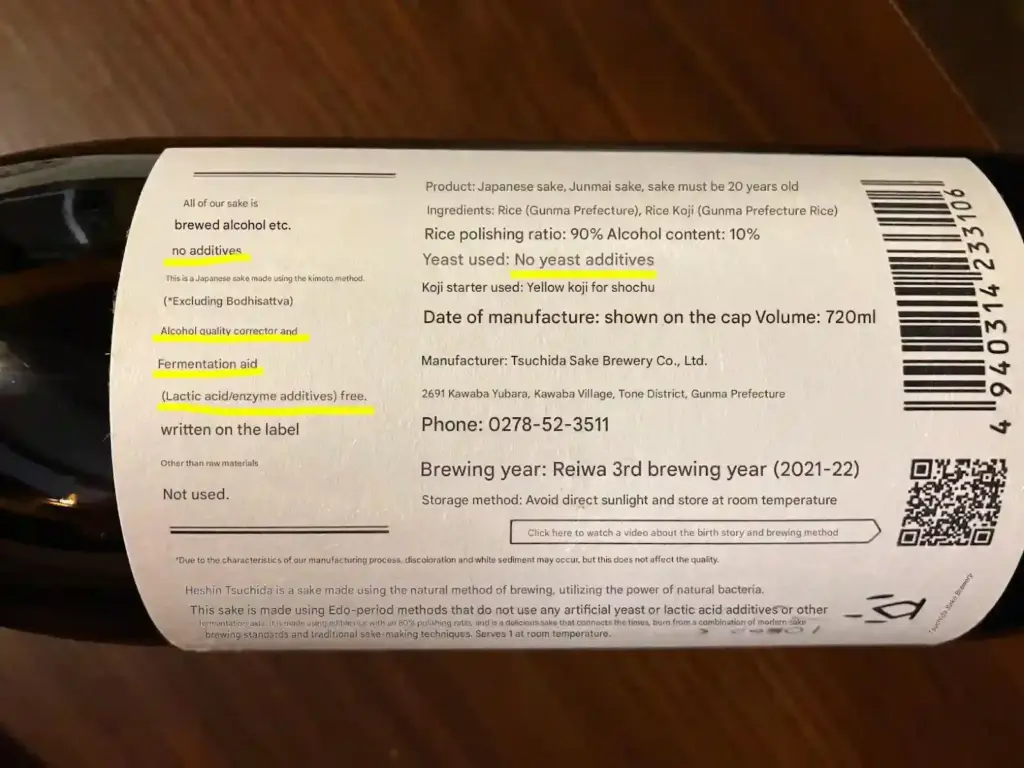
The word “無添加”-Mutenka, means ”Additive-free”, so if the label has the word “無添加/additive-free” or “自然酒/natural sake”, it means it is natural sake- By looking for this word, you can find natural sake.
Translated in English、“無添加: No additives” and “酵母無添加; No yeast additives”. Finding these words is one way to find natural sake.
Conclusion
If the label does not show the word “無添加/additive-free”, usually they contain additives. Please look for the word “無添加/additive-free” or “自然酒/natural sake” on the label in order to find natural sake.
Your Japan Trip Gets Better Once You Understand Sake
Start with Kyoto Insider Sake Experience in Fushimi.
Fushimi is Kyoto’s sake district — but simply visiting a bar or shop won’t help you understand which sake to choose or why it tastes the way it does.

At Kyoto Insider Sake Experience, you’ll join an expert-led sake tasting and food pairing session designed to help you taste with confidence. By comparing different styles side by side, you’ll clearly understand the differences in aroma, flavour, and structure — and discover what you truly enjoy.
This experience is the perfect introduction to sake at the beginning of your trip in Japan. Not just tasting sake, but learning how to choose it — anywhere, anytime.
Discover Japan’s real sake & food culture in Fushimi.