
Kyoto is not just Japan’s cultural capital — it is also one of the quiet powerhouses of Japanese sake.
At the heart of this tradition lies Fushimi, one of Japan’s three major sake-producing regions, alongside Nada and Saijo.
This guide brings together Kyoto’s most important sake breweries — from historic giants to modern craft producers — into one clear map for visitors.
If you are looking to understand, visit, and taste Kyoto sake properly, this is where you begin.
Curated by Certified Sake Specialists
This guide is curated by Certified Sake Specialists based in Kyoto, with direct experience visiting local breweries and working within the region’s sake community.
All recommendations reflect firsthand tasting, industry knowledge, and current local insight.
Why Kyoto (Especially Fushimi) Is Known for Its Sake
Pure Underground Water of Fushimi
Fushimi’s reputation begins underground. The area is blessed with soft, mineral-balanced groundwater, known as Fushimizu. This water flows gently, without harshness — ideal for fermentation that emphasizes smoothness and clarity.
Many breweries here have drawn from the same wells for centuries. The water has not changed. The craft has only deepened.
Over 400 Years of Brewing History
Fushimi’s sake industry began in the late 16th century, nearly vanished during the Edo period, and was reborn in the Meiji era when rail opened the Tokyo market. Gekkeikan (1637), Kitagawahonke (1657), and Masuda Tokubee Shoten (1675) brewed through it all, and still do. → [The full story of Fushimi’s sake history]
Kyoto’s Terroir and Microorganisms
Sake is not just rice, water, and yeast. It is place.
Fushimi’s climate, humidity, and naturally occurring microorganisms shape fermentation in subtle ways.
The result is a style that values balance over power, elegance over intensity.
The Character of Kyoto Sake
Kyoto sake is known for its subtlety rather than intensity.
It tends to be soft and rounded on the palate, with umami taking precedence over sharpness, and a clean, unobtrusive finish.
Designed to complement food—particularly Kyoto cuisine—it does not seek attention.
Instead, it lingers quietly, revealing its depth over time.
List of Sake Breweries in Kyoto
Kyoto’s sake breweries are not uniform in size, style, or openness to visitors.
Some have brewed on the same land for centuries, while others represent a more contemporary approach to Kyoto sake.
Fushimi Sake District
Gekkeikan (月桂冠)
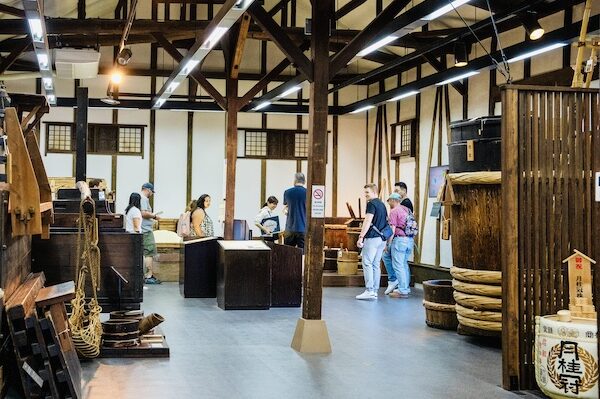
Gekkeikan, founded in 1637, is one of Japan’s most established sake breweries, with a history spanning nearly four centuries.
Recognizable by its laurel crown logo, the brewery has long balanced continuity and innovation—maintaining classic sake styles while also developing new expressions using modern brewing techniques and yeasts.
As a result, Gekkeikan offers a wide range of sake that reflects both its heritage and its evolving approach to brewing.
Gekkeikan Ōkura Sake Museum – Visitor Information
- Location: Fushimi, Kyoto
- Visitor Access: Open to the public; museum-style facility
- Tours: Self-guided museum exhibits; no active production tour
- English Support: English signage and materials available
- Tasting: Yes — tasting included with museum admission
- Shop: Yes — Gekkeikan sake and exclusive products available
- Official Website: https://www.gekkeikan.co.jp/english/
→ [Read more about Gekkeikan Okura Sake Museum]
Kizakura (黄桜)
Kizakura, founded in 1925, is a Fushimi-based brewery known for combining traditional sake brewing with a spirit of openness and innovation.
Easily recognized by its iconic kappa character, the brewery has long sought to make sake more approachable while continuing to explore new techniques, including craft beer production.
For visitors, Kizakura offers two distinct facilities in Fushimi.
Kizakura Kappa Country is a lively, visitor-friendly space focused on tasting, dining, and enjoying a wide range of Kizakura’s sake and beer, while Kizakura Fushimigura provides a quieter, more educational experience centered on brewing processes and behind-the-scenes observation.
Together, these two locations reflect both sides of Kizakura’s philosophy—sake as something to enjoy casually, and sake as a craft shaped by careful technique.
Kizakura Kappa Country – Visitor Information
- Location: Fushimi, Kyoto
- Visitor Access: Open to the public; restaurant, tasting area, and shop accessible without reservation
- Tours: No formal brewery production tour; facility includes exhibits and themed displays
- English Support: Limited; advance inquiry recommended for detailed English explanations
- Tasting: Yes — sake and craft beer available through paid tastings and dining
- Shop: Yes — Kizakura sake, Kyoto craft beer, and souvenirs available
- Official Website: https://kizakura-brewery.com/
Note: This venue is a mix of brewery-themed museum, restaurant, and brewery atmosphere — ideal for tasting sake and craft beer in a lively space.
→ [Read more about Kizakura Kappa Country]
Kizakura Fushimigura – Visitor Information
- Fushimi, Kyoto (about 20 minutes on foot from Chushojima Station)
- Visitor Access: Free self-guided facility (about 30 minutes). Check the official site for current reservation requirements.
- Tours: No guided tours. Viewing areas show both sake and craft beer production.
- English Support: English panels and information available
- Tasting: Yes — Sake and fresh craft beer at the on-site restaurant
- Shop: Yes — Yes. Kizakura sake, craft beer, and souvenirs are available.
- Official Website: https://kizakura.co.jp/en/husimigura/
Note: This is one of the few places in Japan where you can observe both sake and craft beer production processes in one facility, with explanatory exhibits and displays. This facility focuses more on brewery processes and behind-the-scenes observation than restaurant-style experience.
→ [Read more about Kizakura Fushimigura]
Matsumoto Shuzo (松本酒造)
Matsumoto Shuzo, founded in 1791, is a long-established Kyoto brewery best known for its flagship label, Sawaya Matsumoto.
While rooted in tradition, the brewery is widely respected for producing clean, precise sake with a distinctly modern sensibility.
Focused on brewing rather than tourism, Matsumoto Shuzo represents a quieter side of Kyoto sake—one that is best understood through tasting its refined expressions rather than visiting the facility itself.
Matsumoto Shuzo– Visitor Information
- Location: Fushimi, Kyoto
- Visitor Access: Not open to the public; production areas are closed to visitors
- Tours: Not available
- English Support: Not available for public visits
- Tasting: Not available on-site
- Shop: No on-site public shop; products available through select retailers and restaurants
- Official Website: https://matsumotoshuzo.com/en/
Kitagawahonke / Tomio (北川本家・富翁)
Kitagawahonke, founded in 1657, is one of Fushimi’s long-established sake breweries, best known for its flagship brand Tomio.
For over three centuries, the brewery has focused on producing sake that reflects a classic Kyoto style—soft, balanced, and deeply connected to everyday Japanese cuisine.
Rather than pursuing scale or spectacle, Kitagawahonke has remained committed to continuity and careful craftsmanship, making its sake a quiet but enduring presence in Kyoto’s brewing tradition.
Kitagawahonke / Tomio – Visitor Information
- Location: Fushimi, Kyoto (near Fushimi-Momoyama area)
- Visitor Access: Limited; production areas are not generally open to the public
- Tours: Not regularly available
- English Support: Limited; advance inquiry recommended
- Tasting: Limited tastings may be available at the shop depending on season and availability
- Shop: Yes — Tomio sake and seasonal releases available
- Official Website: https://www.tomio-sake.co.jp/en/
Fujioka Shuzo / Sookuu (藤岡酒造 / 蒼空)
Fujioka Shuzo, founded in 1902, is a small Fushimi brewery best known for its flagship label Sookuu.
After closing in 1995, it was revived in 2002 by its fifth-generation owner, Masaaki Fujioka. Today it brews only junmai sake, in a clean, contemporary style that has earned it a devoted following. Its story of revival makes it one of the most compelling voices of modern Kyoto sake.
Fujioka Shuzo / Brewery Tasting Bar En – Visitor Information
- Location: Fushimi, Kyoto
- Visitor Access: Open to the public; tasting bar and shop accessible
- Tours: Guided brewery tours available by reservation (typically outside the main brewing season)
- English Support: Limited; advance inquiry recommended
- Tasting: Yes — sake tastings available at the on-site brewery tasting bar
- Shop: Yes — Sookuu sake and seasonal releases available
- Official Website: https://www.sookuu.net/
Note: Fujioka Shuzo is a small, artisan sake brewery in Fushimi, known for its handcrafted pure rice sake Sookuu, and this location includes Sakagura(brewery) Bar En, a tasting bar where you can enjoy several varieties while observing production areas through glass.
For readers interested in a deeper look at Fujioka Shuzo, the following articles offer firsthand insights into the brewery and its philosophy:
Visiting Sake Brewery Note – Fujioka Shuzo / Brewery Tour
A detailed walkthrough of the brewery space and production process, offering practical context for visitors.
Visiting Sake Brewery Note – Fujioka Shuzo / Interview with the Brewer
A behind-the-scenes conversation exploring the brewer’s approach, values, and vision behind Sookuu.
Saito Shuzo / Eikun (齊藤酒造・英勲)
Saito Shuzo (齊藤酒造), founded in 1895, is a Fushimi-based brewery best known for its flagship brand Eikun (英勲).
The name “Eikun,” meaning “glorious achievement,” reflects the brewery’s long-standing reputation for producing award-winning sake rooted in Kyoto’s soft-water tradition.
Balancing refinement with quiet confidence, Saito Shuzo is known for elegant, well-structured sake that pairs naturally with Japanese cuisine.
It represents a classic yet slightly more expressive side of Fushimi brewing—respected both locally and in national competitions.
Saito Shuzo / Eikun – Visitor Information
- Location: Fushimi, Kyoto
- Visitor Access: Limited; production areas are not generally open to the public
- Tours: Not regularly available
- English Support: Limited; advance inquiry recommended
- Tasting: Limited tastings may be available at the shop depending on season and availability
- Shop: Yes — Eikun sake and seasonal releases available
- Official Website: https://www.eikun.com/
→ [Read more about Saito Shuzo]
Tsuki no Katsura / Masuda Tokubee Shoten (月の桂 / 増田徳兵衛商店)
Masuda Tokubee Shoten (増田徳兵衛商店), founded in 1675, is one of Fushimi’s oldest sake breweries and the producer of the historic brand Tsuki no Katsura (月の桂).
Widely credited as a pioneer of nigori sake and early sparkling sake styles in Japan, the brewery has long balanced tradition with quiet innovation.
Deeply rooted in Kyoto’s soft-water brewing culture, Tsuki no Katsura is known for elegant, layered sake that expresses both craftsmanship and individuality.
It represents a distinctive voice within Fushimi—historic, refined, and subtly unconventional.
Tsuki no Katsura / Masuda Tokubee Shoten – Visitor Information
- Location: Fushimi, Kyoto
- Visitor Access: Limited/ The brewery is not regularly open for public tours.
- Tours: Occasional visits may be possible by prior arrangement.
- English Support: Limited; advance inquiry recommended.
- Tasting: Limited tastings may be available depending on season and availability.
- Shop: Yes — Tsuki no Katsura sake and seasonal releases available for purchase.
- Official Website: https://tsukinokatsura.co.jp/en/
→ [Read more about Tsukino Katsura Sake Brewery]
Central Kyoto
While most of Kyoto’s sake breweries are concentrated in Fushimi, a few historic producers remain within central Kyoto itself, quietly continuing the city’s long brewing tradition.
These breweries typically operate on a smaller scale and are often located in residential neighborhoods near historic landmarks. Visits are usually limited or reservation-based, but they offer a rare opportunity to experience sake brewing without leaving Kyoto’s historic city center.
Matsui Shuzo (松井酒造)
Matsui Shuzo, founded in 1726, is one of only two breweries still brewing in central Kyoto.
Best known for its flagship brand Kagura (神蔵), the brewery combines traditional Kyoto brewing techniques with a refined, modern presentation.
Unlike many historic breweries that limit public access, Matsui Shuzo actively welcomes visitors and offers guided tours—including tours conducted in English.
Its presence in central Kyoto makes it a rare opportunity to experience sake brewing without leaving the city center.
Matsui Shuzo – Visitor Information
- Location: Central Kyoto
- Visitor Access: Open to the public by reservation for guided tours; shop access available during business hours
- Tours: Yes — guided brewery tours available; English-language tours offered with advance reservation
- English Support: Available for tours (reservation required)
- Tasting: Yes — guided tastings included as part of the brewery tour
- Shop: Yes — Kagura (神蔵) sake and seasonal releases available
- Official Website: https://matsuishuzo.com/?mode=f8
For a firsthand look at the English-guided tour, the self-service tasting of more than 20 drinks, and the sake our sommeliers recommend, see our sommelier’s guide to Matsui Sake Brewery.
Sasaki Shuzo (佐々木酒造)
Sasaki Shuzo, founded in 1893, is a historic sake brewery located in central Kyoto, near Nijo Castle.
Best known for its flagship brand Jurakudai (聚楽第), the brewery carries a strong connection to Kyoto’s cultural heritage—its name referencing the grand residence once built by Toyotomi Hideyoshi.
Despite its central location, Sasaki Shuzo remains a working brewery rather than a museum-style facility.
Its sake reflects a classic Kyoto softness, designed to pair harmoniously with traditional cuisine while preserving a sense of place and history.
Sasaki Shuzo (佐々木酒造) – Visitor Information
- Location: Kamigyo Ward, central Kyoto, near Nijo Castle (727 Kitaiseya-cho)
- Visitor Access: The brewery shop is open to walk-in visitors. Brewery tours require advance reservation.
- Shop Hours: 10:00–17:00 (closed Sundays, national holidays, Obon, and New Year)
- Tours: Guided brewery tours on scheduled dates, by reservation only. International visitors can book through Wabunka, which provides an interpreter.
- English Support: Available for tours booked through Wabunka (interpreter included). Limited at the shop.
- Tasting: Paid tasting at the shop (¥500), no reservation needed
- Shop: Yes. Jurakudai, Koto, and shop-exclusive sake are available.
- Official Website: https://www.jurakudai.com/
Kameoka: The Mist-Valley
Just west of Kyoto City, Kameoka lies in a quiet basin surrounded by mountains and farmland. Morning mist often settles over the valley, creating a calm environment that has long supported rice cultivation and small-scale sake brewing.
Compared with the busy brewery district of Fushimi, Kameoka represents a quieter side of Kyoto’s sake culture. The area is easily accessible from Kyoto Station—about 20 minutes by JR train—yet it offers a distinctly rural atmosphere where sake brewing remains closely connected to the surrounding landscape.
Tanzan Shuzo (丹山酒造) – Introduction
Tanzan Shuzo, founded in 1890, is a small sake brewery located in Kameoka, a quiet valley area just west of Kyoto.
Known for its flagship brand Tanzan (丹山), the brewery reflects a distinctly rural expression of Kyoto sake shaped by the region’s cool climate and mountain water.
Unlike the larger breweries of Fushimi, Tanzan Shuzo operates on a modest scale, focusing on careful craftsmanship and local character. Its location in what is often called the “mist valley” of Kameoka gives the sake a softer, atmospheric identity rooted in the surrounding landscape.
Visitors can stop by the brewery to learn about the production process through an introductory video and enjoy sake tastings at the entrance area. While the active brewing facilities are not open for tours inside the kura, the experience offers a simple introduction to the brewery and its sake. In addition, Tanzan sake can often be tasted at selected specialty sake shops in Kyoto and Uji CIty, making it relatively accessible even without traveling to Kameoka.
Tanzan Shuzo – Visitor Information
- Location: Kameoka, Kyoto (mountain valley west of Kyoto)
- Visitor Access: Visitors are welcome at the brewery entrance area
- Tours: Informal visit available; guests can watch an introductory video about the brewing process
- English Support: Limited; advance inquiry recommended
- Tasting: Yes — sake tasting available while viewing the brewery introduction video
- Brewery Interior: The active brewing kura is not open for entry
- Shop: Yes — Tanzan sake available for purchase at the brewery
- Official Website: https://tanzan.co.jp/
Northern Kyoto: Tango’s Coastal Sake Culture
Northern Kyoto, particularly the Tango region, faces the Sea of Japan and has a climate quite different from Kyoto City. Cooler temperatures, heavy winter snowfall, and strong agricultural traditions shape a distinctive brewing environment.
Sake from this region often reflects a close relationship with local farming and rice cultivation. Although farther from Kyoto City, the area can still be reached in around two hours by train, revealing a different side of Kyoto’s sake culture rooted in the coastal countryside.
Shirasugi Shuzo (白杉酒造) – Introduction
Shirasugi Shuzo, founded in 1777, is a historic sake brewery located in Kyotango in northern Kyoto Prefecture, near the Sea of Japan. The brewery is widely known for its distinctive philosophy of brewing sake using table rice instead of traditional sake rice, creating a unique style within the Japanese sake world.
Behind this decision lies a strong commitment to the brewery’s home region of Kyotango. Shirasugi Shuzo works exclusively with rice grown locally in the Kyotango area, reflecting a deep connection to the land and its agriculture. Through this philosophy, the brewery seeks to express the character of the region while exploring new possibilities in sake brewing.
One of its flagship brands, Shirakiku (白木久), showcases the brewery’s philosophy of brewing with locally grown table rice, offering a distinctive expression of Kyotango’s agricultural landscape.
Shirasugi Shuzo – Visitor Information
- Location: Kyotango, Northern Kyoto (Tango region near the Sea of Japan)
- Visitor Access: Visitors are welcome at the on-site shop
- Tours: Brewery tours are not offered
- English Support: Limited; advance inquiry recommended
- Tasting: Staff are available to explain the sake and suggest food pairings at the shop
- Shop: Yes — an on-site shop sells Shirasugi’s distinctive sake, including freshly released nama genshu available only at the brewery
- Dog-Friendly: The brewery features a large artificial turf dog run (about 500 m²)
- Official Website: https://sake-shirakiku.jp/
Interactive Map of Kyoto Sake Breweries
This curated map shows the locations of Kyoto’s key sake breweries across Fushimi, central Kyoto, Kameoka, and the Tango region.
It provides a visual overview of where sake is made and how Kyoto’s brewing culture is geographically structured.
Use the map to explore the district and plan your visit more effectively.
Curated by Certified Sake Specialists based in Kyoto.
Brewery Tours Available in Kyoto
Unlike many wine regions, sake breweries in Kyoto were not originally designed to welcome visitors.
For centuries, these breweries have focused first on production, craftsmanship, and seasonal rhythms rather than tourism.
As a result, public access varies widely. Some breweries offer museum-style visits, others allow limited entry by reservation, and many remain closed to visitors altogether.
Understanding how brewery tours work in Kyoto helps set expectations—and allows you to choose experiences that align with how sake is actually made and preserved here.
Museum-Style Tours
In Kyoto, larger sake breweries often welcome visitors through museum-style facilities rather than active production floors.
These spaces focus on history, brewing tools, and the cultural background of sake, making them easy to understand even for first-time visitors.
A well-known example is the Gekkeikan Ōkura Sake Museum, where structured exhibits guide you through the basics of sake brewing, followed by a short tasting.
While these tours provide clear context and historical insight, they are less intimate than visits to small, working breweries.
Small-Scale Craft Breweries
Some small-scale breweries in Kyoto allow visits, but access is limited and carefully controlled.
Because these breweries operate with small teams and focus on daily production, visits usually require advance reservations and may only be available during certain seasons.
English explanations are often minimal, and tours are not guaranteed.
However, when visits are possible, they offer a rare glimpse into working breweries where craftsmanship takes priority over tourism.
Guided Tours (English Available?)
English-language support varies among Kyoto’s sake breweries. A few offer guided tours in English. Matsui Shuzo runs its own English tours, and Sasaki Shuzo accepts bookings through Wabunka with an interpreter. Most other working breweries offer little English beyond signage.
For a deeper explanation of brewing methods, styles, and flavors, many international visitors pair a brewery visit with a guided sake tasting in English.
Typical Time & Cost
Sake-related tours and experiences in Kyoto vary widely in both structure and depth.
While most options fall within 1.5 to 3 hours, prices typically range from around USD 80 to approximately USD 180–190, depending on what is included.
Time and price alone do not tell the full story.
Many visitors also compare experiences based on the number of sake tasted, whether the guide is a certified or specialized professional, the atmosphere of the tasting space (private and relaxed versus casual or crowded), and whether the experience is operated by a Kyoto-based local company with deep ties to the region.
Because these factors differ significantly from one experience to another, reviewing options side by side is often the most effective way to choose.
For a clear overview of what is available in Kyoto and how each experience differs, the following article provides a detailed comparison:
→ [Best Sake Tours in Kyoto – A Detailed Comparison]
Which Breweries Are Best for Visitors?
Kyoto’s sake breweries differ greatly in scale, accessibility, and atmosphere.
The recommendations below focus on breweries that are especially suitable for visitors, taking into account reviews, language accessibility, and overall experience.
For First-Time Visitors
Gekkeikan (月桂冠) is the most approachable choice for visitors new to sake.
Its museum-style setting clearly explains the basics of brewing, making it easy to understand Kyoto sake without prior knowledge.
Kizakura (黄桜) is also well suited for beginners who want a relaxed, visitor-friendly experience.
With tastings, a restaurant, and clear displays, it allows first-time visitors to enjoy sake without feeling overwhelmed.
Breweries with English Support
Matsui Shuzo is one of the few breweries in Kyoto offering guided tours in English. Visitors walk through a working urban brewery and taste its sake with explanations in English. Advance reservation is required.
Gekkeikan Ōkura Sake Museum offers English signage and printed explanations throughout the facility.
While guided tours in English are limited, the museum is designed so international visitors can explore independently with confidence.
Fujioka Shuzo is relatively accessible thanks to its modern tasting space and intuitive layout.
Although full English guidance is not always available, the environment itself makes the experience comfortable for non-Japanese speakers.
For History-Focused Visitors
Gekkeikan, founded in 1637, provides one of the clearest views into the historical development of sake in Kyoto.
Its preserved tools and archives show how brewing techniques evolved alongside the city itself.
Kitagawahonke (Tomio) is ideal for visitors who value tradition over spectacle.
As a long-established family brewery, it represents a quieter, more authentic side of Fushimi’s sake heritage.
For Craft Sake Enthusiasts
Matsumoto Shuzo is highly regarded among serious sake drinkers for its precise, modern expressions.
Although the brewery itself is not generally open to the public, its sake is widely available and worth seeking out.
Fujioka Shuzo appeals to those interested in contemporary craft sake.
Its small-scale production and modern philosophy offer insight into the future direction of Kyoto sake.
How to Plan a Brewery-Hopping Day in Fushimi Sake District
Fushimi is compact enough to explore in a single day, yet rich enough to reward a slower pace.
Rather than trying to visit as many breweries as possible, this model itinerary focuses on balance—combining context, walking, and tasting without rushing.
Morning – Gekkeikan Ōkura Sake Museum
Start your day at Gekkeikan, one of the most accessible breweries for visitors.
The museum provides a clear introduction to sake brewing, helping you understand the basic process, tools, and history before exploring Fushimi further.
Beginning with a structured visit makes the rest of the day easier to follow and more meaningful.
Lunch – Local Dining in Fushimi
After your morning visit, enjoy lunch in Fushimi.
The area offers casual local restaurants and traditional Japanese cuisine that pair naturally with Kyoto-style sake.
Taking time for lunch also gives your palate and pace a gentle reset before the afternoon.
Afternoon – Visit Smaller Breweries or Explore the Neighborhood
In the afternoon, shift your focus to smaller breweries or quiet exploration.
Some small-scale breweries may allow limited visits, while others are best appreciated from the outside as part of Fushimi’s historic streetscape.
Walking through canalside paths and residential streets helps place sake within the everyday rhythm of the neighborhood.
Evening – Guided Sake Tasting at KISE
End the day by deepening your understanding at Kyoto Insider Sake Experience (KISE).
The 1.5-hour guided tasting features seven carefully selected sake, paired with food, and explained step by step by certified specialists.
After seeing where sake is made, this tasting connects production to flavor—bringing clarity to everything you
experienced throughout the day.
FAQ – Visiting Sake Breweries in Kyoto
Visiting sake breweries in Kyoto often raises practical questions, especially for first-time visitors.
- Do I need a reservation?
-
Not for museum-style facilities. You can walk into Gekkeikan Ōkura Sake Museum and Kizakura Kappa Country. Brewery tours at working breweries, such as Matsui Shuzo and Sasaki Shuzo, require advance booking. Many brewery shops, including Sasaki Shuzo’s, welcome walk-in visitors for tasting and shopping.
- What is the drinking age, and can children visit?
-
The legal drinking age in Japan is 20, and it applies to tastings. Children are welcome at museum-style facilities, where the exhibits can be enjoyed without drinking.
- Can I tour breweries in English?
-
Yes, at a few. Matsui Shuzo offers guided tours in English, and Sasaki Shuzo accepts international bookings through Wabunka, which provides an interpreter. Gekkeikan Ōkura Sake Museum has English signage for self-guided visits.
- Are breweries open on weekends?
-
Not always. Working breweries run on weekday schedules, and some shops close on Sundays and national holidays. Sasaki Shuzo, for example, closes on Sundays and holidays. Check hours before planning a weekend visit, and expect closures during Obon and the New Year holidays.
- How do I get to the Fushimi Sake District?
-
The district is a short walk from Chushojima and Fushimi-Momoyama stations on the Keihan Line, or Fushimi and Momoyama-Goryomae stations on the Kintetsu Line.
Recommended: Sake Tasting After Your Brewery Visit
Visiting sake breweries shows you where sake is made and how it has been produced in Kyoto for centuries.
What it often does not provide is the opportunity to taste widely, compare styles, and understand how differences in water, rice, and technique appear in the glass.
At Kyoto Insider Sake Experience (KISE), guided tastings bridge that gap.
In a calm, private setting, certified sake specialists guide you through carefully selected sake, helping you connect what you saw in Fushimi with what you taste.
1.5H Sake Tasting Experience
The 1.5-hour experience offers a well-balanced introduction with seven thoughtfully selected sake and food pairings, guided by certified sake specialists.
Held in a calm, private tasting space, it is the most popular option for visitors who want a clear and refined introduction to Kyoto sake without feeling rushed or overwhelmed.
3-Hour Sake Tasting + Brewery Tour
The 3-hour experience is a more educational, in-depth program designed for those who want to understand how Kyoto sake is made and why it tastes the way it does.
It combines museum and brewery visits with a step-by-step explanation of brewing techniques, followed by a guided tasting of up to 10 sake, including special selections, paired with food.
This format allows you to move from observation to understanding—connecting production, history, and flavor into a clear framework.
After walking through breweries, this is where Kyoto sake becomes clear—and memorable.
Explore more
→ 1.5H Sake Tasting Experience
→ 3-Hour Sake Tasting + Brewery Tour