
Most travelers associate Kyoto sake with Fushimi, but the city’s brewing story stretches far beyond its most famous district. During our recent visit to Sasaki Sake Brewery, we had the opportunity to learn about its long history spanning more than 130 years, observe the craftsmanship behind its sake, and experience one of the few remaining breweries in central Kyoto. In this guide, we’ll share what we learned, what visitors can expect today, and why Sasaki Sake Brewery deserves a place on the itinerary of anyone interested in Kyoto’s sake culture.
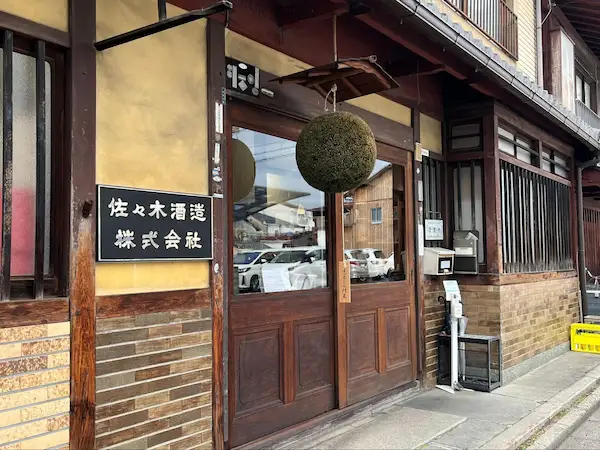
Why Sasaki Sake Brewery Is Unique
Most of Kyoto’s famous sake breweries are found in Fushimi.
Few visitors realize that one of the city’s most historic breweries still quietly operates in central Kyoto.
Step just one street away from the crowds of tourists, and you’ll find a place where time seems to slow its pace, Rakuchū, central Kyoto. Here stands a sake brewery that has continued brewing on this very site for more than 130 years.
Once, Rakuchū was a thriving hub of sake production, home to more than 130 breweries. As the city evolved, most moved to the suburbs in search of larger plots of land—or closed altogether, their former sites transformed into apartment buildings. Today, only a handful of breweries remain in central Kyoto. Many of Kyoto’s surviving breweries are now concentrated in areas such as Fushimi. If you’re interested in exploring the city’s brewing heritage beyond Sasaki Sake Brewery, our Kyoto Sake Brewery Guide introduces the breweries that continue to shape Kyoto’s sake culture today. Sasaki Sake Brewery is one of the few that remain in the historic city center, and its presence alone quietly speaks to the depth of Kyoto’s sake history.
Interestingly, this brewery did not begin as a sake maker. It started as an oil merchant, later supplying barrel sake to Gekkeikan while gradually refining its brewing skills. Eventually, Sasaki Sake Brewery established itself as an independent brewery, producing sake under its own name. Every bottle today carries the weight of that long journey—of trial, persistence, and craft accumulated over generations.
Is Sasaki Sake Brewery Worth Visiting?
Yes—especially if you’re interested in discovering a quieter side of Kyoto’s sake culture beyond the famous breweries of Fushimi.
What makes Sasaki Sake Brewery special is its setting. It is one of the few breweries still producing sake in Kyoto’s historic city center, where more than 130 breweries once operated. Visiting today offers a rare connection to a part of Kyoto’s sake history that has largely disappeared from the surrounding streets.
It is particularly well suited for sake lovers and travelers interested in Japanese craftsmanship or Kyoto’s history. Tasting sake made here, surrounded by traces of the brewery’s long history, gives you a different perspective on Kyoto sake—one shaped not by the scale of a major tourist attraction, but by the continuity of a brewing tradition that has remained in this part of the city for generations.
How Sasaki Sake Brewery Crafts Its Sake
Water and Rice: The Foundations of Flavor
Inside the brewery lies a private well, approximately 15 meters deep. Its water is used for nearly every stage of brewing—from washing tools to rinsing and preparing the rice.
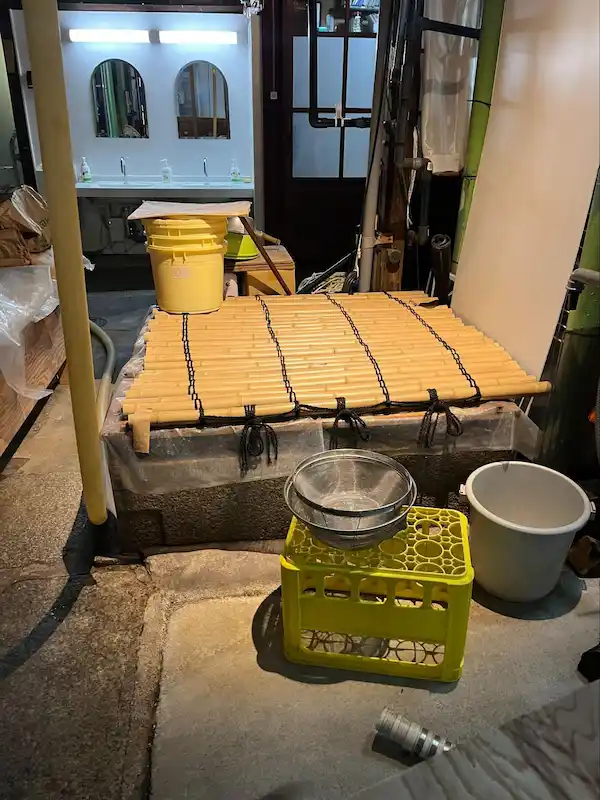
This water comes from Kyoto Basin’s underground flow and is classified as medium-hard water. While many Fushimi breweries rely on soft water, Sasaki Sake Brewery’s water is said to be similar to Ginmeisui, a famed spring historically associated with Sen no Rikyū’s tea ceremonies and Toyotomi Hideyoshi’s Jurakudai palace.
The contrast between Sasaki’s medium-hard water and the soft water of Fushimi highlights how even within Kyoto, breweries have developed their own brewing styles. If you’d like to learn more about why Fushimi became Japan’s most famous sake district, our Fushimi Sake District Guide explores the area’s history, water, and brewing culture.
Whether legend or fact, the idea that the land’s history flows directly into the sake is undeniably poetic.
The rice, polished off-site, is steamed early in the morning—ready by 7:30 a.m. Using a boiler and traditional koshiki steaming vats, the brewery steams between 600 kilograms and one ton of rice at a time.
The goal is gaikō-naian: firm on the outside, soft on the inside. This texture allows kōji mold to penetrate deep into the grain in search of moisture, resulting in ideal kōji development—an essential factor in refined sake.
The Labor Behind Daiginjō
Once steamed, the rice is cooled and sprinkled with kōji mold before being carried into the kōji room.
For daiginjō and junmai daiginjō, everything is done by hand. No machines. Brewers carry heavy loads of rice up steep stairs into the kōji room, an environment of high heat and humidity. These premium sakes demand such conditions—without them, the kōji develops unevenly, compromising delicacy and balance.
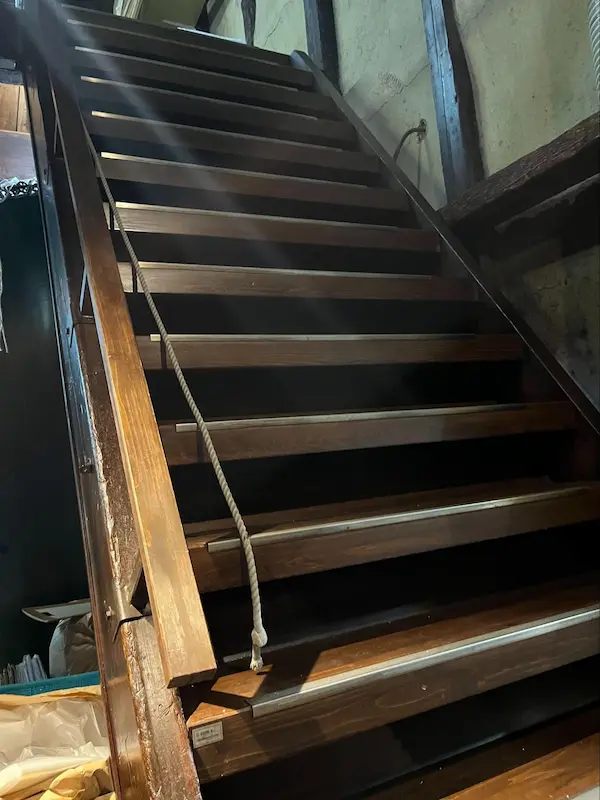
To prevent even the slightest drying of the rice, the kurabito works with intense focus. It is physically demanding labor, but the reward is sake that is fragrant, clean, and elegant. Just by imagining the brewers moving tirelessly up and down the stairs, one can feel their pride and devotion radiating through the space.
Watching this process made us realize that premium sake is as much about patience and craftsmanship as it is about ingredients.
It’s easy to admire a beautifully crafted daiginjō in the glass, but seeing the physical effort and precision required behind every batch made us realize just how much dedication goes into every bottle.
Pressing Methods and the Many Faces of Sake
After fermentation, the moromi (fermenting mash) is pressed using one of three methods:
Automatic Press (Yabuta)
Efficient and consistent, producing a bolder flavor profile well-suited for everyday sake.
Centrifugal Separation
A luxurious method that extracts only the clearest portion through high-speed rotation. Yield is limited to about 40–50%, but the aroma and purity are exceptional.
Fukuro-tsuri (Bag Drip)
Moromi is placed in cloth bags and allowed to drip naturally. The result is the most graceful and aromatic sake—but in very small quantities. Its rarity is reflected in its price.
Each method serves a purpose, chosen carefully according to the intended character of the sake. Experiencing how pressing alone can transform aroma and flavor makes their deep commitment to the craft of sake unmistakably clear.
Winter Brewing and the Work of the Kurabito
Sake brewing here follows the traditional kanzukuri season, from October through the end of March. Of the roughly 20 staff members, seven kurabito lead the brewing process.
Each year, about 60 tanks are brewed, producing the equivalent of roughly 120,000 1.8-liter bottles. The tanks are intentionally kept small to allow precise temperature control using tubing. If the mash cools too much, it’s gently warmed. Brewers carefully balance saccharification and fermentation, stirring the moromi with kaibō paddles by hand.
At every stage, thoughtful care is evident. Nothing is rushed. Nothing is left to chance.
Shop and Tasting Area
Near the entrance is a shop and tasting space. Here, visitors will notice charming cat illustrations and figurines throughout.
The cat is the brewery’s symbol—long cherished as a guardian that protects precious rice from mice. It’s a small detail, but one that adds warmth and personality to the space.
In the shop, visitors can purchase not only sake, but also sake lees, ochoko cups, and various original goods. The tasting counter offers around 15 different sakes to sample.
After learning about the brewery’s approach to water, rice, and brewing, tasting the finished sake became much more meaningful.
Each sake offered a different expression of the brewery’s style—from fresh seasonal releases to elegant aged sake. Together, they reflected the balance between tradition and craftsmanship that we had observed throughout the brewery.
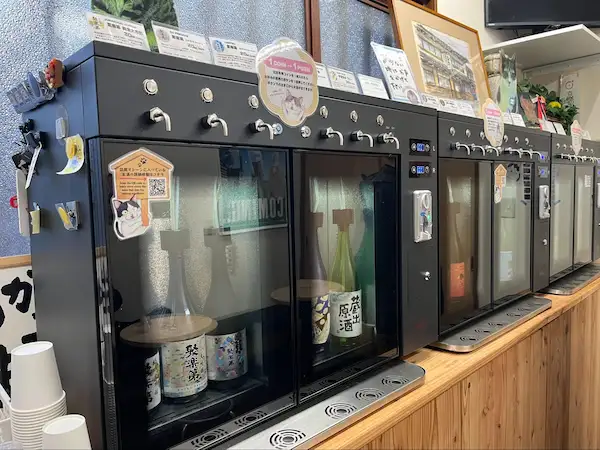
・“Koto Shiboritate”-Has a banana-like aroma and flavor, with a clean and refreshing finish.
・“Koto Fukumidori Tokubetsujunmai”- The rice character comes through clearly, followed by a light, brisk finish with a subtle hint of bitterness.
・“Nishijin Tokubetsujunmai”- It has pronounced acidity, giving the impression that it would pair beautifully with sushi rice.
・“Nishijin Tokubetsujunmai Jyukuseishu”-The color is relatively pale, yet it shows a faint touch of aged character, with a delicate soy sauce-like aroma.
・”Jyurakudai Limited Edition”- Fruity and exceptionally clean on the palate, with no off-flavors-smooth, light, and very easy to drink.
If you’d like to compare sake from many different Kyoto breweries in one visit, Fushimi Sake Village offers more than 150 sake from 18 local breweries, making it another excellent destination for sake lovers.
What to Expect When You Visit
Sasaki Sake Brewery is a working brewery and is not generally open for guided public tours. While the brewery occasionally hosts special events or private visits, these are not regularly available to visitors.
The good news is that the brewery’s shop and tasting area are open to the public during business hours. Visitors can sample a selection of sake, purchase bottles to take home, and browse original goods such as ochoko cups and sake lees.
Although you won’t be able to tour the brewing facilities, visiting the shop is still a worthwhile experience. After learning about the brewery’s history and craftsmanship, tasting its sake in the place where it is made offers a deeper appreciation of one of Kyoto’s few remaining breweries in the historic city center.
Final Thoughts
If this visit has sparked your curiosity about Kyoto’s sake culture, you might also enjoy exploring other historic breweries in our Kyoto Sake Brewery Guide, or experience Kyoto sake firsthand through the Kyoto Insider Sake Experience.
Reading about sake is the first step. Walking through a brewery, meeting the people behind it, and tasting sake with its story in mind transforms the experience completely.
That’s exactly what we hope to share through the Kyoto Insider Sake Experience. Our small-group tours take place in Kyoto’s historic Fushimi Sake District, where Certified Sake Specialists guide you through brewery visits, sake tastings, and food pairings that reveal the craftsmanship, history, and culture behind every glass.
FAQ
| Name of Brewery | Sasaki Sake Brewery |
| Region / District | Kamigyo-ku, Kyoto |
| Opening Hours | 10:00 – 17:00 |
| Closed | Sundays, public holidays, Obon and New Year’s holidays |
| Website | https://www.jurakudai.com/ |
| Shop / Purchases | Available (10:00-17:00 excluding Sundays and public holidays) |
| Tasting | Available (10:00-17:00 excluding Sundays and public holidays) |
| Guided Tours | Not generally open for guided public tours |
| English Support | Limited (varies by staff) |
| Reservation | Not required, tasting is open to visitors during regular opening hours |
Your Japan Trip Gets Better Once You Understand Sake
Start with Kyoto Insider Sake Experience in Fushimi.
Fushimi is Kyoto’s sake district — but simply visiting a bar or shop won’t help you understand which sake to choose or why it tastes the way it does.

At Kyoto Insider Sake Experience, you’ll join an expert-led sake tasting and food pairing session designed to help you taste with confidence. By comparing different styles side by side, you’ll clearly understand the differences in aroma, flavour, and structure — and discover what you truly enjoy.
This experience is the perfect introduction to sake at the beginning of your trip in Japan. Not just tasting sake, but learning how to choose it — anywhere, anytime.
Discover Japan’s real sake & food culture in Fushimi.

Written by Kyoko, a sake tour guide
Qualifications: Sommelier of sake
About me:
Sake is of course delicious, but also unique and profound in so many ways, more than I ever imagined. I would love to share this world of sake with you!
I am passionate not only for sharing knowledge of sake, but for creating an unforgettable experience for all of our guests.