
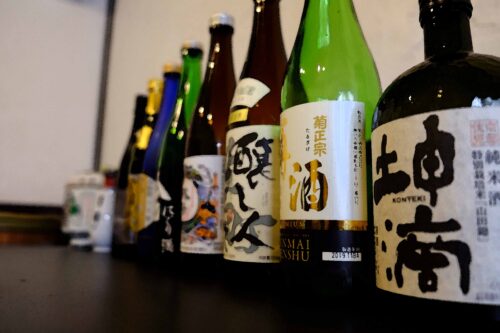
Sake is more than a drink.
It is the quiet result of water, rice, microorganisms, and time.
This guide is your starting point — a clear map to understand what sake is, how it is made, and how to enjoy it.
From here, you can explore deeper topics and begin your own journey into the world of Japanese sake.
What Is Sake?
Sake is a traditional Japanese alcoholic beverage made from rice, water, koji, and yeast.
Unlike wine, it is produced through a unique process where starch is converted into sugar and alcohol at the same time.
This creates a drink with a wide range of styles, from light and aromatic to rich and umami-driven.The result is a drink that can be delicate or rich, aromatic or umami-driven — and far more versatile than most people expect.
→ Explore more:
Ingredients of Sake
At its core, sake is built from just four elements — yet each one shapes the final taste in profound ways.
- Rice
Special varieties of rice are used for brewing. The outer layers are polished away to reveal a pure starchy core, which leads to cleaner and more refined flavors.
- Water
Water makes up around 80% of sake. Its mineral composition influences whether the sake becomes soft and elegant or structured and dry.
- Koji (Mold)
Koji is the invisible architect of sake. It breaks down rice starch into sugar, creating the foundation for fermentation and contributing to umami.
- Yeast
Yeast determines the aromatic profile — from fruity and floral to earthy and restrained.
→ Explore more:
Basic Sake Brewing Process
Sake brewing is a layered, time-sensitive process where each step builds upon the previous one.
- Rice Polishing
- Removing outer layers to refine flavor.
- Removing outer layers to refine flavor.
- Washing & Steaming
- Preparing the rice for fermentation.
- Preparing the rice for fermentation.
- Koji Making
- Cultivating koji mold on rice.
- Cultivating koji mold on rice.
- Starter (Shubo)
- Creating a yeast-rich environment.
- Creating a yeast-rich environment.
- Moromi (Main Fermentation)
- A slow, multi-stage fermentation process.
- A slow, multi-stage fermentation process.
- Pressing
- Separating liquid sake from solids.
- Separating liquid sake from solids.
- Filtration
- Refining clarity and flavor.
- Refining clarity and flavor.
- Pasteurization
- Stabilizing the sake for storage.
Each stage subtly shapes the final expression — from aroma to texture.
→ Explore more:
- Learn the Basics of Moto (Yeast Starter)
- Fast Brewing Method (Sokujokeishubo)
- All About Pasteurization in Sake Making
Main Categories of Sake
Sake is classified based on ingredients, polishing ratio, and production methods.
- Junmai / Non-Junmai
- Whether pure rice is used or a small amount of alcohol is added.
- Whether pure rice is used or a small amount of alcohol is added.
- Ginjo / Daiginjo
- Highly polished rice leading to lighter, more aromatic styles.
- Highly polished rice leading to lighter, more aromatic styles.
- Honjozo
- A clean, structured style with subtle added alcohol.
- A clean, structured style with subtle added alcohol.
- Nama / Nigori / Koshu
- Unpasteurized, cloudy, or aged styles that offer unique textures and flavors.
These categories are just the starting point — the real experience begins when you taste.
→ Explore more:
- Difference Between Junmai-shu and Alcohol Added Sake
- 7 Organic / Natural Sake You Should Try in Japan
- Must Try in Summer – Sparkling Sake
- Let’s Learn What Aged Sake Is
- Discover the Story Behind Aged Sake
How to Taste Sake
Sake is understood through the senses.
- Aroma
- From apple and melon to rice and earth, aromas can be delicate or expressive depending on the style.
- From apple and melon to rice and earth, aromas can be delicate or expressive depending on the style.
- Sweetness
- Perceived through balance, not sugar alone — shaped by acidity and alcohol.
- Perceived through balance, not sugar alone — shaped by acidity and alcohol.
- Acidity
- Adds structure and freshness, giving sake its sense of clarity and lift.
- Adds structure and freshness, giving sake its sense of clarity and lift.
- Umami
- A quiet depth that supports food and lingers gently on the palate.
- A quiet depth that supports food and lingers gently on the palate.
- Finish
- The impression that remains after each sip, from clean and short to long and layered.
- The impression that remains after each sip, from clean and short to long and layered.
- Temperature
- Cold, room temperature, or warm — each reveals different layers and textures.
- Cold, room temperature, or warm — each reveals different layers and textures.
- Glassware
- A wine glass highlights aroma, while traditional cups bring out texture and body.
→ Explore more:
- Ultimate Sake Tasting and Food Pairing
- Simple Guide for Sake Tasting and Pairing|For Beginners
- How Do You Pick Sake You Like?
- Ultimate Sake Tasting Notes
- 4 Steps to Enjoy Tasting Sake to the Fullest
Sake & Food Pairing
Sake is one of the most food-friendly beverages in the world.
It pairs naturally with Japanese cuisine, but its versatility goes far beyond that — from seafood and meat to cheese and even desserts.
Unlike wine, sake’s umami allows it to complement rather than compete.
→ Explore more:
- What’s the Best Sake to Pair with Sushi?
- Simple Guide for Sake Food Pairing|For Beginners
- Ultimate Sake Tasting and Food Pairing
How to Drink Sake: Temperature & Style
Sake can be enjoyed across a wide temperature range.
- Cold: highlights freshness and aroma
- Room temperature: reveals balance
- Warm (Atsukan): enhances umami and softness
There are no strict rules — only different expressions.
→ Explore more:
- Ultimate Sake Tasting – How to Drink Sake, Hot or Cold?
- What is “Atsukan”? What’s the Best Temperature?
- Ultimate Guide to Hot Sake
How to Read a Sake Label
Understanding these elements helps you move from guessing to choosing with intention.
- Rice Type
- Indicates the variety of rice used, often linked to texture and overall character.
- Indicates the variety of rice used, often linked to texture and overall character.
- Polishing Ratio
- Shows how much of the rice remains after milling, influencing clarity and refinement.
- Shows how much of the rice remains after milling, influencing clarity and refinement.
- Sake Meter Value (SMV)
- A general guide to dryness or sweetness, though balance matters more than the number itself.
- A general guide to dryness or sweetness, though balance matters more than the number itself.
- Acidity
- Shapes structure and freshness, affecting how the sake feels on the palate.
- Shapes structure and freshness, affecting how the sake feels on the palate.
- Yeast
- Contributes to the aromatic profile, from fruity to more subtle expressions.
- Contributes to the aromatic profile, from fruity to more subtle expressions.
- Region & Brewery
- Reflects local conditions and the philosophy of the producer.
→ Explore more:
- (coming soon) How to Read a Sake Label
- (coming soon) The Truth About Sake Meter Value
Sake Storage & Handling
Sake is delicate, shaped by time, temperature, and light.
- Store in a cool, dark place
- Avoid heat and direct sunlight
- Consume soon after opening for best flavor
Handled well, sake rewards you.
Handled poorly, it fades quietly.
→ Explore more:
- (coming soon)How to Store Sake Properly
Beginner-Friendly Sake Recommendations
If you are just starting, these styles are easy to approach:
- Aromatic styles – light, fruity, and expressive
- Balanced styles – smooth and versatile
- Food-friendly styles – subtle and umami-driven
Start simple, then explore.
→ Explore more:
Enjoy Sake in Daily Life
Sake is not only for special occasions.
It can be part of everyday life.
- Enjoy seasonal sake throughout the year
- Try amazake, a non-alcoholic fermented drink
- Discover its connection to health and well-being
Sake is a living culture — not just a beverage.
→ Explore more:
- Enjoy the Four Seasons with Sake
- Try Easy Summery Amazake Recipe at Home
- Health Benefits of Sake – Intestinal Flora and Amazake
- Health Benefit of Sake – Amazake is Best Solution for Constipation
- Health Benefits of Sake – How To Get Along With Sake
FAQ – Learning Sake
Can beginners understand sake easily?
Yes. You do not need prior knowledge — only curiosity.
How long does it take to understand sake?
A basic understanding can come quickly, but true appreciation deepens over time.
Is sake complicated?
Only if explained poorly. At its heart, it is simple and sensory.
Why learn sake while traveling in Japan?
Because context changes everything — water, place, and culture become visible.
→ Explore more:
- (coming soon) Sake FAQ
Learn Through Experience
Reading about sake builds knowledge.
Tasting it builds understanding.
When you experience sake with guidance, labels become meaningful, flavors become recognizable, and preferences become clear.
If you are visiting Kyoto, the most refined way to understand sake is not through books — but through carefully guided tasting.
→ Explore: