
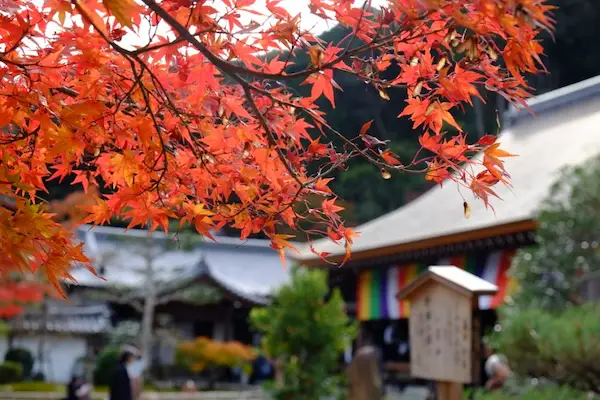
Most visitors notice Kyoto’s autumn when the leaves turn red. But the season begins changing the city long before that.
Mornings become cooler, evenings arrive a little earlier, and the deep green of summer slowly begins to fade. At first, the signs are subtle. Then temple gardens take on a different character, the surrounding mountains turn shades of red and orange, and even an ordinary walk through the city can suddenly feel special.
For many visitors, autumn in Kyoto means one thing: autumn leaves.
Kiyomizu-dera, Arashiyama, Tofuku-ji, and other famous destinations attract visitors from around the world hoping to see Kyoto at its most colorful. And for good reason. If this is your first time in Kyoto, seeing some of these iconic places in autumn can be well worth the crowds.
But there is more to autumn in Kyoto than finding the perfect maple tree.
The food changes. The air changes. Seasonal traditions return. Even the way you explore the city can change.
To really experience Kyoto in autumn, don’t just look for the colors. Pay attention to what is changing around them.
How to Experience Kyoto in Autumn
Autumn is one of the most popular times to visit Kyoto, particularly when the autumn leaves reach their peak.
That means crowds are difficult to avoid.
Rather than spending your entire trip trying to escape them, a better approach is to balance Kyoto’s famous sights with quieter experiences.
Visit that temple you have always wanted to see. Walk through Arashiyama. Take your photo of the autumn leaves.
Then leave some space in your itinerary.
Explore a residential neighborhood. Walk beside a canal. Stop somewhere for lunch and try something seasonal. Visit a different part of Kyoto. Stay out after sunset and see how the city changes at night. Autumn rewards travelers who are willing to slow down and notice the smaller changes happening around them.
Here are some of our favorite ways to experience the season.
Things to Do in Kyoto in Autumn
1. Experience Momijigari and Kyoto’s Famous Autumn Colors
The most obvious change in Kyoto during autumn is also the most spectacular: the landscape.
Mountains surrounding the city begin to change color, temple gardens become framed by autumn leaves, and maple trees add splashes of red and orange to streets that looked completely different only a few weeks earlier.
In Japan, going out specifically to appreciate autumn leaves is known as momijigari (紅葉狩り).
The tradition has a history stretching back more than 1,000 years and reflects something that remains important in Japanese culture today: taking time to appreciate the changing seasons.
Kyoto offers countless opportunities for momijigari.
If this is your first visit, don’t feel that you have to avoid the famous places simply because they are crowded. Kiyomizu-dera offers spectacular autumn scenery, while Arashiyama combines mountains, temples, rivers, and autumn foliage in one area.
They are popular for a reason.
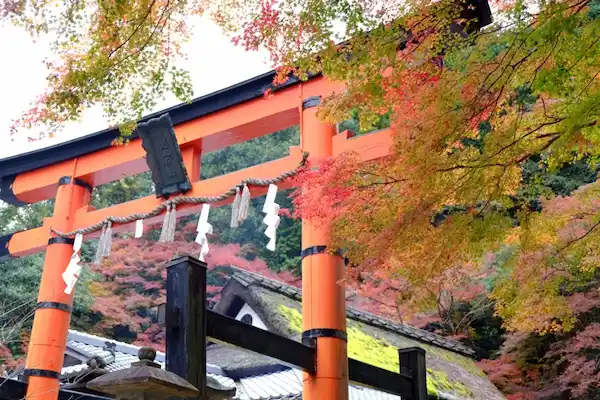
But Kyoto’s autumn colors don’t end at the gates of its famous temples.
2. Find Autumn Colors Away from Kyoto’s Biggest Crowds
Once you have experienced some of Kyoto’s iconic autumn scenery, consider going somewhere quieter.
Autumn leaves can be found throughout the city—in residential neighborhoods, along waterways, on small mountains, and in places that rarely appear at the top of a first-time visitor’s itinerary.
Yamashina Canal: A Quieter Autumn Walk
On the eastern outskirts of Kyoto, Yamashina Canal (Yamashina Sosui) offers a very different experience from the crowded streets surrounding the city’s most famous temples. The canal passes through a quieter residential area, with trees lining the water along parts of the route. During autumn, the changing leaves reflected in the canal create a beautiful setting for a leisurely walk. There is no major landmark you need to reach and no famous photograph you need to recreate.
Just walk.
Places like Yamashina are a reminder that some of Kyoto’s most enjoyable autumn moments can happen when you stop searching for attractions.
Mt. Funaoka: See Autumn from Above
For another perspective, head north to Mt. Funaoka.
This small mountain has a long connection with Kyoto’s history and was regarded as an important site in relation to the ancient capital of Heian-kyo. Today, it offers something much simpler for visitors: a place to look out over Kyoto. From higher ground, you can see the city stretching toward the mountains surrounding it. In autumn, those mountains gradually begin to change color.
The experience is very different from standing beneath the maple trees of a famous temple. Instead of focusing on a single garden or building, you can see how the season is changing the landscape around Kyoto itself.
3. See Kyoto’s Autumn Illuminations at Night
Autumn doesn’t end when the sun goes down.
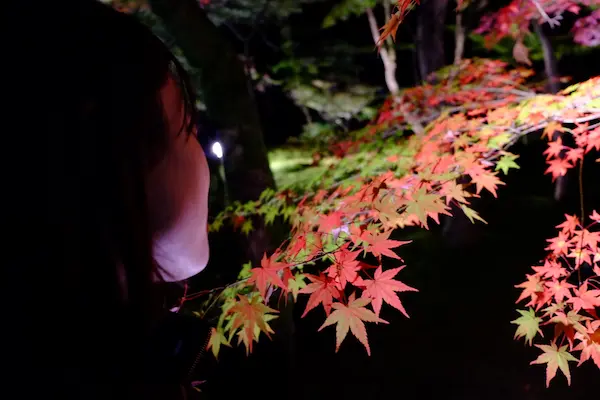
During the season, some temples and gardens in Kyoto offer special evening openings and illuminations. Places that may already be familiar during the daytime can feel completely different after dark. Autumn leaves are illuminated against the night sky, temple buildings emerge from the darkness, and reflections appear across ponds and garden landscapes. It is also a good reminder not to pack every autumn activity into daylight hours. If you visit a temple or garden during the day, experiencing an autumn illumination in the evening can show you another side of the season.
Just remember that popular illuminations can also attract large crowds, particularly during peak foliage.
4. Taste Kyoto’s Autumn Cuisine
Kyoto’s trees are not the only things that change with the season.
So does the food.
Seasonality plays an important role in Japanese cuisine, and autumn brings a new range of ingredients to restaurants, cafés, sweet shops, and markets across Kyoto. Chestnuts, sweet potatoes, persimmons, mushrooms, and other seasonal produce begin appearing on menus.
One autumn specialty worth looking for is shinsoba (新そば)—soba noodles made from the newly harvested buckwheat crop. For soba lovers, the arrival of shinsoba is one of the pleasures of the season.
As the temperature begins to fall, autumn is also a wonderful time to enjoy yudofu, Kyoto’s simple hot tofu dish.
After walking around outside in the cool autumn air, sitting down in front of a warm bowl of food feels particularly satisfying.
Instead of ordering something you could eat at any time of year, look at what has appeared on the seasonal menu.
Autumn in Kyoto isn’t only something you can see.
You can taste it too.
5. Slow Down and Taste Kyoto on Foot
Some of the best things to do in Kyoto in autumn are barely “things to do” at all.
Walk a little farther.
Take the longer route through a neighborhood instead of immediately getting back on the train. Follow a river for a while. Stop at a café. Sit beneath a tree beginning to change color and watch the city around you.
The cooler weather makes autumn particularly pleasant for exploring Kyoto on foot. And once you stop moving from attraction to attraction, you begin to notice smaller details.
The sound of leaves beneath your feet.
A cool breeze coming from the river.
Steam rising from a bowl of hot food.
Autumn colors reflected on the water.
Temple bells in the distance after sunset.
These moments will probably never appear on a list of Kyoto’s top attractions.
But they can become some of the moments you remember most.
You may come to Kyoto to see the autumn foliage, but slowing down allows you to experience something beyond the colors: the atmosphere of the city as the season changes.
Experience Another Side of Autumn in Fushimi
There is another part of Kyoto where autumn brings an important change, although you may not be able to see it from the street.
About 15 minutes south of Kyoto Station lies Fushimi, one of Japan’s best-known sake-producing areas.
Historic sake breweries, traditional buildings, canals, shops, and restaurants give Fushimi a character very different from Kyoto’s temple districts.
And autumn has particular significance here.
Discover Kyoto’s Sake District in Autumn
Sake brewing has traditionally been closely connected to the seasons.
Autumn brings the rice harvest, while the arrival of cooler weather marks the beginning of an important period for sake production.
For that reason, autumn is an interesting time to discover Fushimi and learn about the relationship between Kyoto and sake. Rather than rushing between temples, spend a few hours walking through the district.
Follow the waterways. Look at the old brewery buildings. Visit a sake museum or shop. Stop to taste some local sake.
Fushimi shows that Kyoto’s culture is not confined to temples and shrines.
The city’s traditions can also be found in what people make, eat, drink, and continue to pass from one generation to another.
Go Beyond Sightseeing With Kyoto Insider Sake Experience
You can visit Fushimi on your own, but understanding what you are seeing—and what you are drinking—is another matter.
At Kyoto Insider Sake Experience, our goal is not simply to give you different sake to taste.
We want to change how you understand sake.
Our experiences introduce you to the history and culture of sake, explain how it is made, and help you understand why different sake can taste so remarkably different.
With guidance from certified sake specialists, you can explore different styles of sake and discover how they interact with food while learning more about the brewing culture that has shaped Fushimi.
You may arrive knowing very little about sake.
You may leave looking at every glass differently.
And during a season when Kyoto itself is changing, Fushimi offers another way to experience that transformation—one that goes beyond what you can see.
Experience More Than Kyoto Autumn’s Leaves
Autumn in Kyoto is beautiful.
There is no need to pretend otherwise.
Go to the famous temples. See the maple leaves. Take the photograph you came halfway around the world hoping to take.
But don’t let that be the whole experience.
Walk somewhere without a famous landmark waiting at the end. Eat something because it is only available at this time of year. Stay outside after sunset. Explore another part of the city. Learn about a tradition you knew nothing about before arriving.
Because autumn changes more than Kyoto’s scenery.
It changes its food, its atmosphere, its rhythms, and the way the city feels.
The change can seem subtle at first.
But once you start paying attention, you begin to notice it everywhere.
FAQ – Visiting Kyoto in Autumn
Your Japan Trip Gets Better Once You Understand Sake
Start with Kyoto Insider Sake Experience in Fushimi.
Fushimi is Kyoto’s sake district — but simply visiting a bar or shop won’t help you understand which sake to choose or why it tastes the way it does.

At Kyoto Insider Sake Experience, you’ll join an expert-led sake tasting and food pairing session designed to help you taste with confidence. By comparing different styles side by side, you’ll clearly understand the differences in aroma, flavour, and structure — and discover what you truly enjoy.
This experience is the perfect introduction to sake at the beginning of your trip in Japan. Not just tasting sake, but learning how to choose it — anywhere, anytime.
Discover Japan’s real sake & food culture in Fushimi.
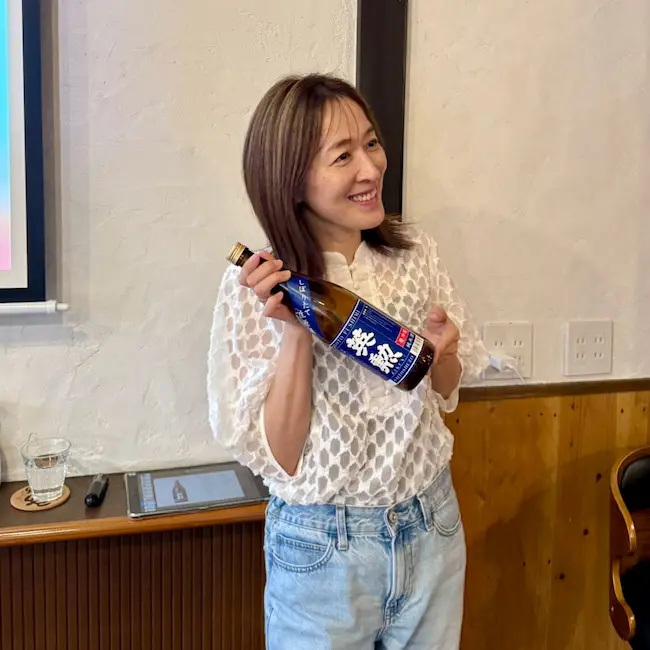
Written by Kyoko, a sake tour guide
Qualifications: Sommelier of sake
About me:
Sake is of course delicious, but also unique and profound in so many ways, more than I ever imagined. I would love to share this world of sake with you!
I am passionate not only for sharing knowledge of sake, but for creating an unforgettable experience for all of our guests.