
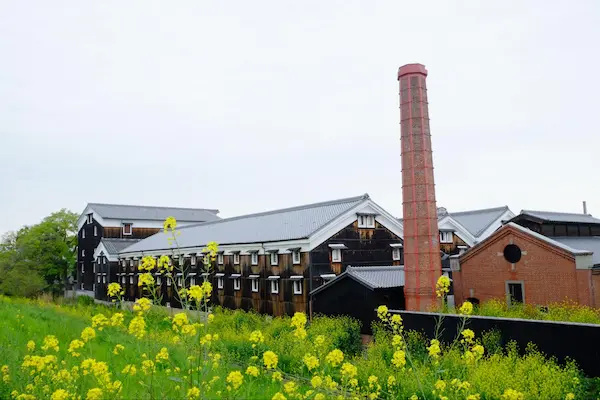
In Kyoto’s Fushimi district stands one of Japan’s most remarkable sake breweries.
Matsumoto Sake Brewery is not simply a producer of sake. It is a living piece of Kyoto’s brewing heritage—a place where history, craftsmanship, architecture, and culture continue to coexist.
Known for its iconic buildings and towering red-brick chimney, the brewery has become one of the most recognizable landmarks in Fushimi, Kyoto’s most famous sake-producing district.
As organizers of sake experiences in Kyoto, we frequently introduce guests to Matsumoto Sake Brewery through its sake. Its flagship label, Momo no Shizuku, is one of the representative brands we feature during our tastings and consistently leaves a lasting impression on visitors seeking a deeper understanding of Kyoto’s sake culture.
Recently, we had the privilege of touring the brewery and several facilities that are not normally open to the public. Seeing firsthand how Matsumoto Sake Brewery continues to preserve its traditions while actively producing sake offered a deeper appreciation of what makes this brewery so special.
In this article, we take a closer look at the history, philosophy, and craftsmanship that have made Matsumoto Sake Brewery one of the defining symbols of Fushimi’s brewing heritage.
230 Years of Sake Brewing in Kyoto’s Fushimi District
The origins of Matsumoto Sake Brewery date back to 1791, when the founder, Jihei Matsumoto, began brewing sake in Kyoto under the trade name Sawaya.
In 1922, the seventh-generation Jihei relocated the brewery to Fushimi in search of abundant, high-quality groundwater. The decision proved transformative. Fushimi’s soft underground water remains one of the region’s greatest natural resources and continues to play a central role in the brewery’s sake production today.
The company was officially incorporated as Matsumoto Sake Brewery Co., Ltd. in 1949 and has continued to evolve while remaining deeply connected to its traditions.
One of Kyoto’s Most Historic Working Sake Breweries
What makes Matsumoto Sake Brewery particularly unique is that its historic buildings remain active production facilities.
The brewery has received numerous recognitions, including designation as a Historic Design Structure by Kyoto City and registration as a Tangible Cultural Property by Japan’s Agency for Cultural Affairs.
Yet unlike many preserved historic sites, Matsumoto Brewery was never frozen in time.
Sake is still brewed here.
Workers continue to maintain the buildings, care for the equipment, and pass down techniques from one generation to the next. The brewery functions not as a museum, but as a living workplace where tradition remains part of everyday life.
This may be one of the most compelling aspects of Matsumoto Brewery: it preserves history not by displaying it, but by continuing it.
“The brewery may age, but never let the interior grow old”
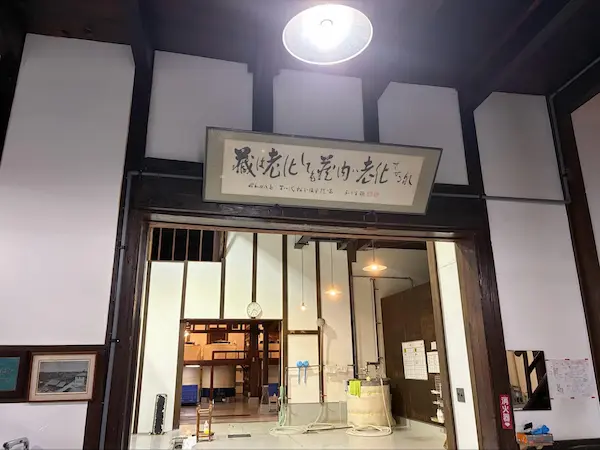
During our visit inside the brewery, one phrase immediately caught our attention:
“The brewery may age, but never let the interior grow old”
This motto was left behind by the eighth-generation owner and continues to guide the brewery today.
The meaning is simple yet profound. While the buildings themselves will inevitably age, the quality of the sake, the spirit of craftsmanship, and the dedication of the people working within the brewery must never be allowed to grow old.
According to the toji (master brewer), nearly 80 percent of the brewery’s annual effort is devoted to cleaning and maintenance. Brewing itself accounts for only a fraction of the work required to keep the brewery operating at the highest standard.
Standing inside the wooden kura that has been in use since the Taisho era, it becomes clear why. The continued production of high-quality sake in a century-old building is only possible through relentless care and attention to detail.
Brewing Sake to Accompany Food
The philosophy of Matsumoto Brewery can be summarized in a single idea:
To create sake that complements food.
Rather than emphasizing powerful aromas or dramatic flavors, the brewery aims to produce balanced sake that enhances the dining experience.
Even its ginjo-style sake tends to exhibit restraint and elegance. The flavors are carefully designed to accompany a meal rather than dominate it.
Underlying this philosophy is another guiding principle:
“Rice and Water is the essence of all”
To achieve this, the brewery places tremendous importance on both rice and water.
The brewing water is drawn directly from the brewery grounds, using the high-quality underground water that has made Fushimi famous for sake production.
For rice, the brewery uses respected varieties such as Yamada Nishiki from Hyogo Prefecture and Gohyakumangoku from Toyama Prefecture.
A Rare Commitment to Rice Polishing
One aspect of Matsumoto Brewery that often surprises sake enthusiasts is its commitment to in-house rice polishing.
Most breweries outsource this process. Matsumoto Brewery, however, continues to polish its own rice on-site.
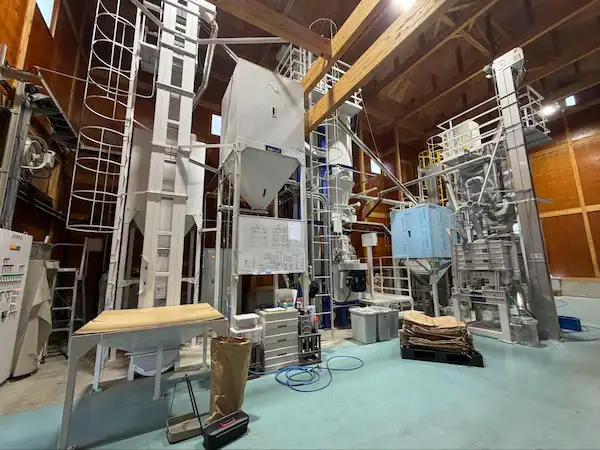
During our visit, we had the opportunity to step inside the rice-polishing facility. The machine itself stood several meters tall, dominating the space with an almost industrial grandeur. Seeing it in person made it immediately clear that rice polishing is far more than a simple preparatory step—it is a craft in its own right.
Operating an in-house polishing facility requires significant investment, time, and expertise. Yet it allows the brewery to maintain complete control over one of the most important stages of sake production.
The commitment reflects a broader philosophy of respecting every ingredient and every step of the brewing process.
Even the rice bran produced during polishing is carefully reused. Some becomes animal feed or fertilizer, while the finest white rice bran is used as an ingredient in food products, ensuring that as little as possible goes to waste.
Preserving Culture Beyond Sake
The brewery’s dedication extends far beyond sake production.
Within the grounds stands Mangyoin, a former guest residence built in the elegant sukiya architectural style associated with Japanese tea house ceremonies.
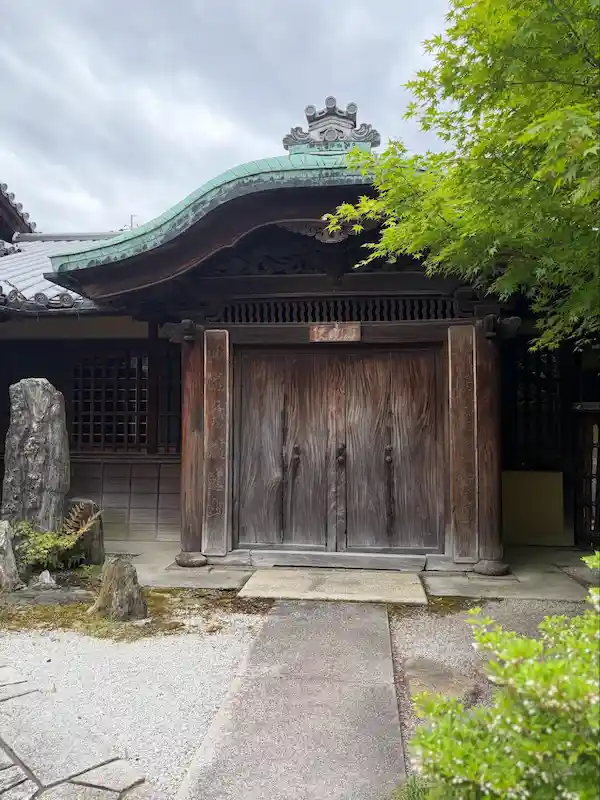
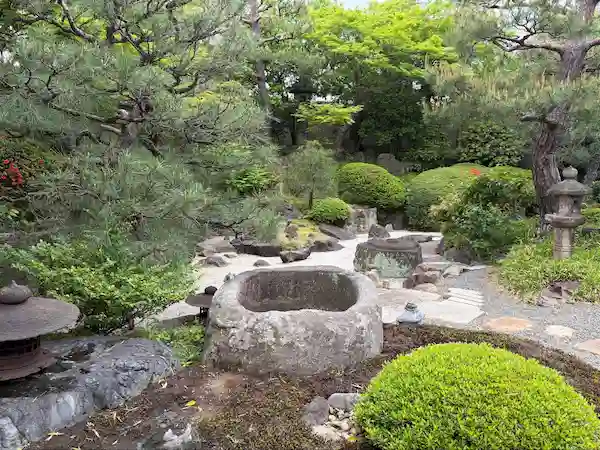
Surrounded by a beautifully maintained Japanese garden, the residence reflects a worldview in which sake, architecture, landscape, and cultural tradition are inseparable.
Walking through the brewery grounds, one encounters buildings from the Meiji, Taisho, Showa, and Heisei eras standing side by side. Together they tell the story not only of one brewery, but also of modern Japan itself.
Sake Worth Discovering
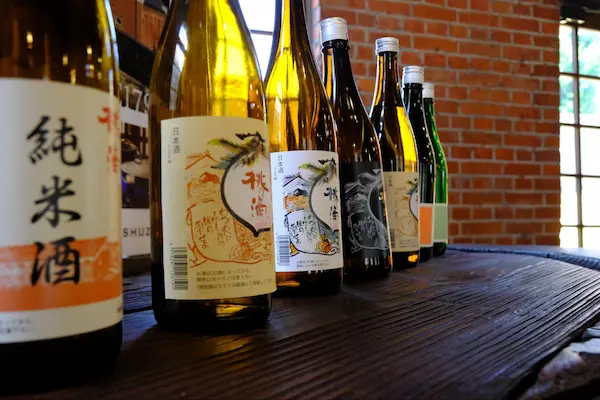
Momo no Shizuku Junmai Ginjo
Produced using 100% Yamada Nishiki rice from Hyogo Prefecture’s renowned Special A growing region, this sake offers gentle ginjo aromas, a clean finish, and exceptional versatility at the table.
Hidemori Kuriyazake
Originally developed as a cooking sake, this junmai sake does far more than enhance ingredients. Rich in rice character and umami, it can also be enjoyed as a sake in its own right.
NEW KYOTO.JP Hakuryoku
Fresh, lively, and lightly sparkling from natural fermentation, this modern sake offers a wine-like profile and pairs effortlessly with a wide range of cuisines.
A Living Legacy of Fushimi
Matsumoto Sake Brewery represents something increasingly rare in the modern world.
It is a place where history has not been preserved behind glass.
Instead, history continues to work, breathe, and evolve through the daily craft of sake brewing.
For more than two centuries, generations of brewers have preserved not only buildings and techniques, but also a way of thinking—one that values patience, craftsmanship, and respect for tradition.
For those seeking to understand the cultural foundations of Kyoto’s sake heritage, few breweries embody the spirit of Fushimi more completely than Matsumoto Sake Brewery.
Experience the Spirit of Fushimi
Although Matsumoto Sake Brewery is not generally open to visitors, the spirit that has sustained it for generations can still be discovered throughout Fushimi.
The district remains home to historic breweries, traditional streetscapes, and one of Japan’s most celebrated sake cultures.
At Kyoto Insider Sake Experience, we help guests explore this world through guided tastings, local stories, and a deeper understanding of how sake is woven into Kyoto’s history and daily life.
Because sake is more than a drink.
It is a reflection of place, people, and tradition.
And nowhere is that more evident than in Fushimi.
FAQ
| Name of Brewery | Matsumoto Sake Brewery |
| Region / District | Kyoto, Fushimi |
| Opening Hours | 8:00 – 17:00 |
| Website | https://matsumotoshuzo.com/en/ |
| Shop / Purchases | At the brewery: Not normally available for purchase Available during Kurabiraki (Sake Brewery Open House): Mid-March & Late October Online: Available from the brewery’s online shop (Domestic shipping in Japan only) https://shop.matsumotoshuzo.com/ |
| Tasting | At the brewery: Not normally available for tasting Available during Kurabiraki (Sake Brewery Open House): Mid-March & Late October |
| Guided Tours | No |
| English Support | No |
| Reservation | Required |
| Notes | You can contact them from https://matsumotoshuzo.com/contact/ |
Your Japan Trip Gets Better Once You Understand Sake
Start with Kyoto Insider Sake Experience in Fushimi.
Fushimi is Kyoto’s sake district — but simply visiting a bar or shop won’t help you understand which sake to choose or why it tastes the way it does.

At Kyoto Insider Sake Experience, you’ll join an expert-led sake tasting and food pairing session designed to help you taste with confidence. By comparing different styles side by side, you’ll clearly understand the differences in aroma, flavour, and structure — and discover what you truly enjoy.
This experience is the perfect introduction to sake at the beginning of your trip in Japan. Not just tasting sake, but learning how to choose it — anywhere, anytime.
Discover Japan’s real sake & food culture in Fushimi.
Written by Kiyomi, a sake tour guide
Qualifications: Sommelier of sake
About me:
When I lived abroad, I enjoyed wine, but after returning to Japan, I became completely fascinated with sake. Sake has incredible depth. Through the tour, I hope to provide an opportunity to experience Japanese culture through sake and help create wonderful memories of your time in Japan.